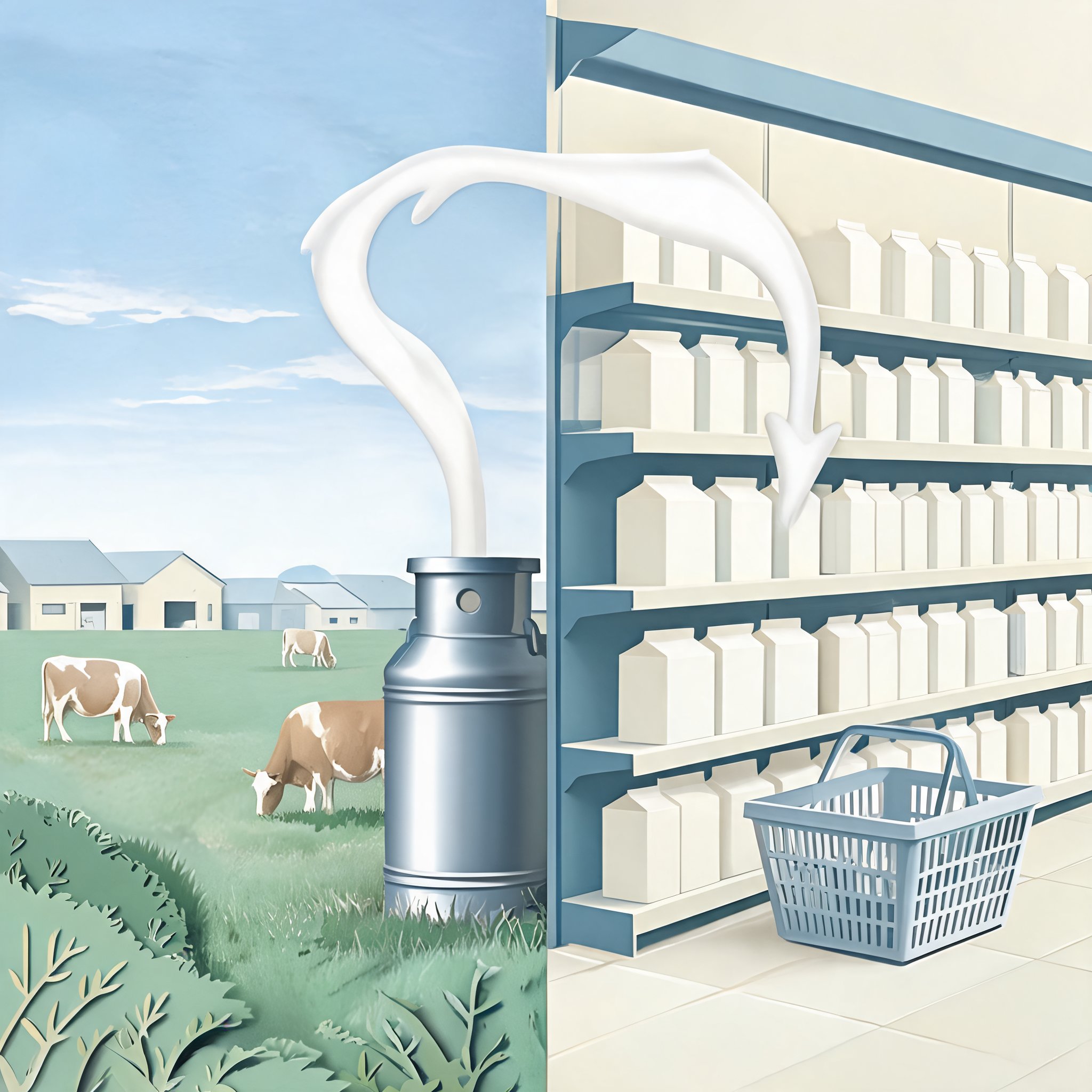
The Irish Farmers' Association (IFA) has urged retailers to return an additional 7c/L to fresh milk farmers this winter to help offset rising input costs. The farm organisation also called on grocers to stock dairy brands owned by farmers and encouraged consumers to look for milk carrying the National Dairy Council logo.
The IFA said a year-round supply of fresh milk requires extra labour and incurs substantial additional costs. It warned on Tuesday, 3 November, that fresh milk farmers were facing higher costs while the farmgate price for milk remained low. The organisation presented the 7c/L request as a way to address that pressure within the existing retail price.
Henry Dunne, the IFA's liquid milk chair, said processors' premiums for liquid milk production had been eroded by the considerable decline in the base milk price over the past two years. He said the organisation was seeking a fairer share of the existing retail price.
Concentrated retail and processing
According to the IFA, seven milk processors handle the majority of Ireland's fresh milk and pay a premium above the standard manufacturing milk price. The organisation also said five major supermarket retailers dominate the grocery market with a combined share of 94%.
The IFA estimated that about 70% of retail fresh milk sales are now private label, sold at an average discount of 15% compared with farmer-owned brands. Private-label milk sells at a lower price than branded milk, it said. The organisation argued that persistent pressure to cut prices had squeezed margins for fresh milk producers.
Its case rests on the distinction between fresh liquid milk and standard manufacturing milk. Fresh milk requires year-round output and carries a processor premium, but the IFA says that premium has been weakened by the fall in the base price. It is also concerned that lower-priced private label accounts for a large share of sales, while farmer-owned brands are priced higher.
Fewer producers
The IFA said the number of fresh milk producers had fallen to 1,094, compared with 3,344 in 1995, a decline of 66%. It linked the decline to the margin pressure facing specialist liquid milk suppliers.
The organisation called on the National Milk Agency to ensure that fresh milk farmers are adequately compensated. It also asked the Agri-Food Regulator to bring transparency to producer, processor and retailer margins.
The National Milk Agency was established under the Milk (Regulation of Supply) Act 1994 to regulate the supply of milk for liquid consumption throughout the state. The IFA's requests focus on how the existing retail price is shared and on greater visibility of margins across the chain, rather than on a specific proposal to raise the shelf price.