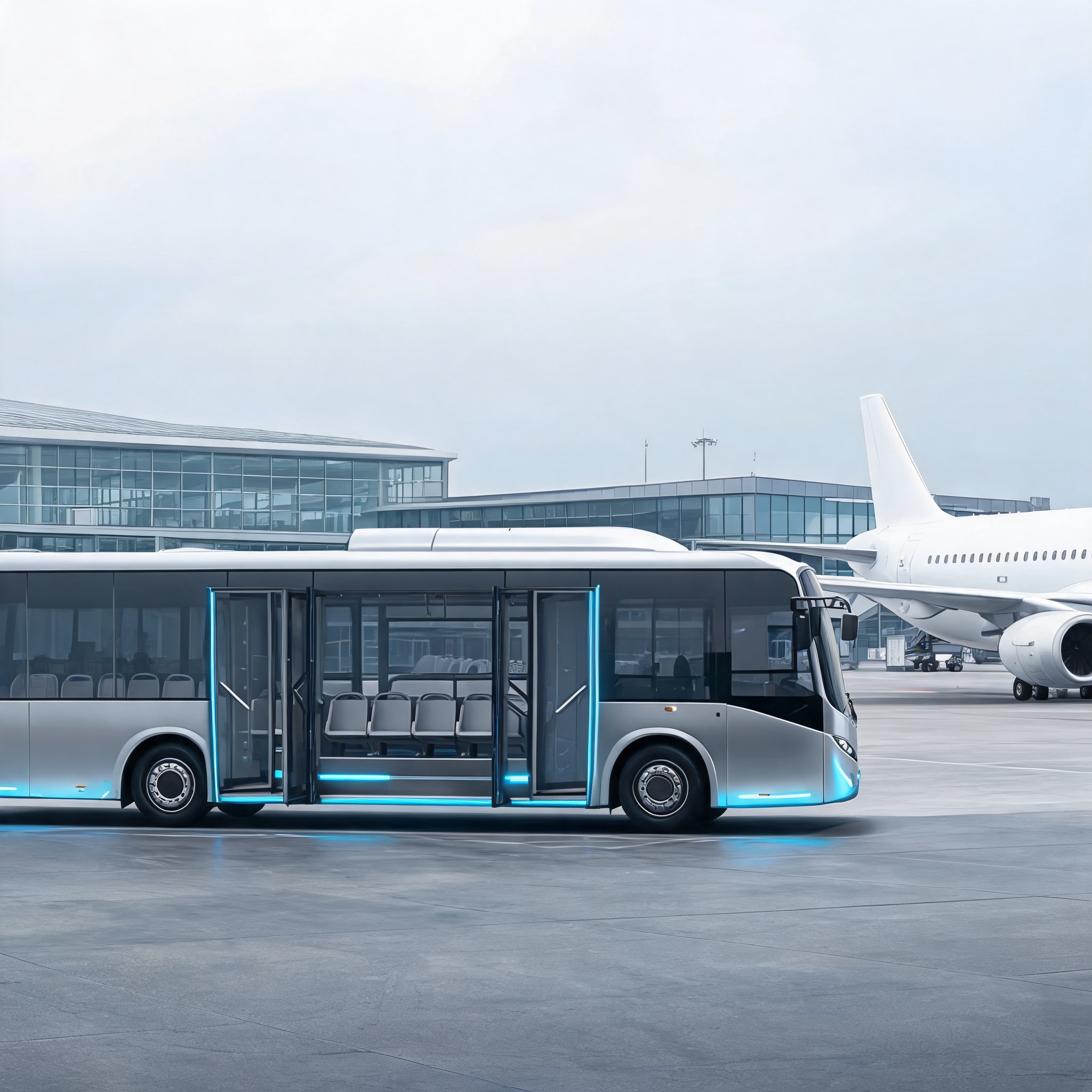
Dnata is adding four fully electric Cobus VEGA apron buses to its ground-handling fleet at Rome Fiumicino Airport, with the vehicles scheduled to begin carrying passengers between terminals and aircraft in mid-November. The company said it will be the first ground handler to deploy the new model.
The buses are designed specifically for airport apron operations. According to dnata, they offer higher passenger capacity than conventional airport buses. Redesigned doors are intended to speed boarding and alighting, while improved air conditioning is meant to enhance comfort. Dnata did not disclose battery capacity, range or charging power.
With the four additions, the bus fleet at Fiumicino will expand beyond its current 40 vehicles. Twenty-three of those buses are already electrically powered, according to the company. The announcement does not specify the powertrain of the remaining vehicles. Dnata expects the new buses to make apron handling more efficient and help keep aircraft turnaround times as short as possible.
Part of a wider Italian investment
The purchase is part of a modernisation programme in which dnata has invested more than €30 million over the past three years. During that period, the company acquired more than 550 new ground-handling equipment units at Rome Fiumicino, Milan Malpensa and Milan Linate airports. The equipment includes passenger buses as well as baggage tractors, conveyor belts, passenger stairs, aircraft loaders and pushback tractors.
Across the three Italian airports, dnata operates more than 1,000 motorised ground-handling equipment units, with over 60 per cent now electrically powered. Where full electrification is not yet operationally feasible, the company is gradually converting diesel-powered equipment to hydrotreated vegetable oil, or HVO.
The programme therefore covers several categories of apron equipment, not only passenger transport. The four VEGA buses represent an expansion of the Fiumicino bus fleet, while the larger investment also includes vehicles and machinery used in baggage, boarding and aircraft handling. Dnata's announcement focuses on passenger-flow and comfort features; because it does not give battery capacity, range or charging power, the buses' operating cycles and charging requirements cannot be assessed from the statement alone.
Charging infrastructure remains a condition
Dnata said further electrification depends on expanding charging infrastructure at the airports. It is working with the respective airport operators to achieve this. In Italy, dnata employs around 5,000 people and serves more than 60 airlines. At its three locations, the company handles over 150,000 flights, 46 million passengers and nearly 18 million pieces of baggage annually.